How I Grew a B2C Startup to 100K+ Organic Traffic and 5K+ Users Using SEO While Everyone Was Chasing TikTok
December 31, 2024
There's a particular kind of advice that circulates in founder circles right now, and it goes something like this: if you're building a consumer app, you need to be on TikTok. You need to work with creators. You need to post twice a day across four platforms, master the three-second hook, and learn to speak in the visual language of short-form video.
I tried to convince myself this was the path. I really did. But every time I sat down to plan a TikTok strategy, I felt a kind of dread that went beyond normal startup discomfort. It wasn't just that the work seemed hard. It was that the work seemed wrong for me — misaligned with both my personality and my resources.
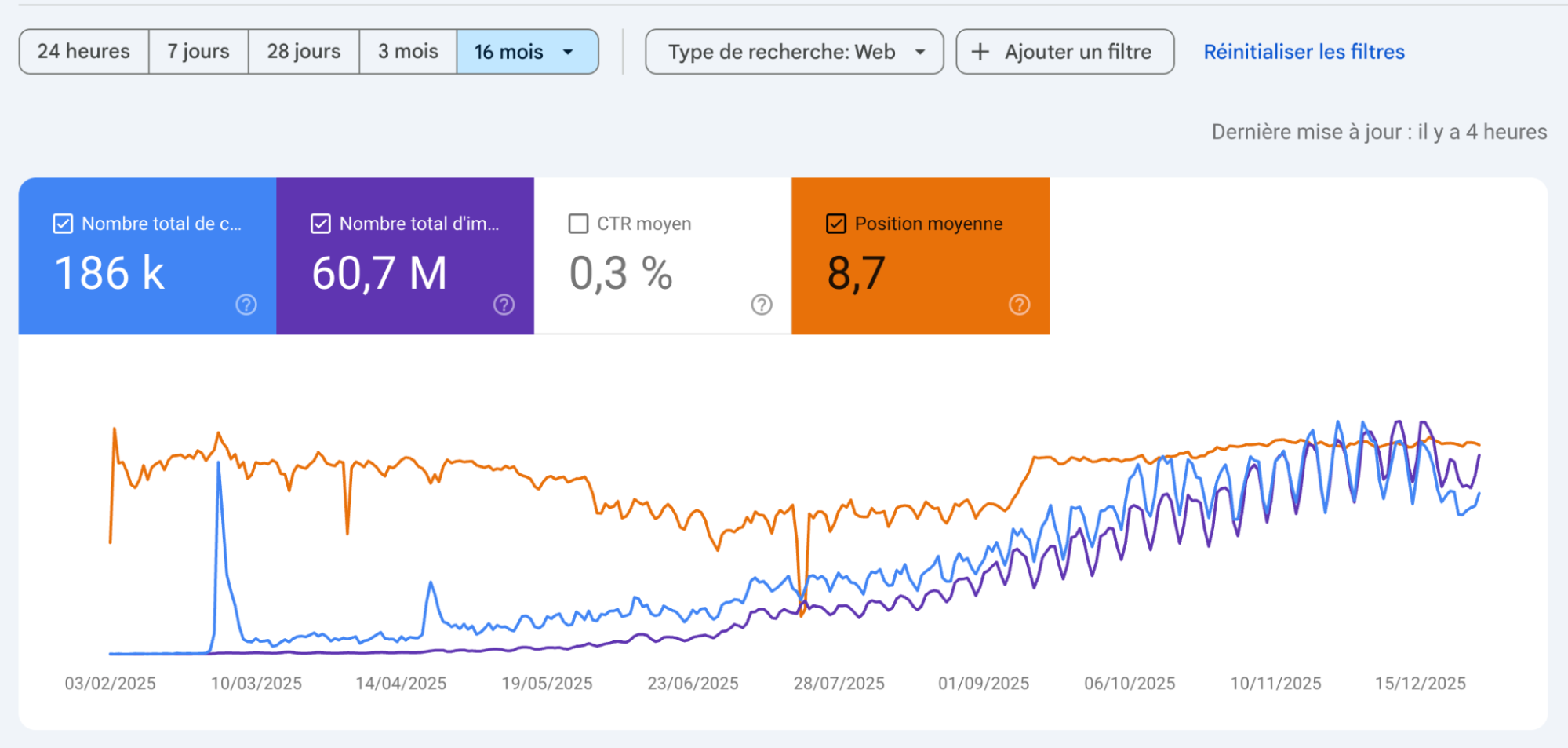
So I did something different. I built an SEO engine instead. Over ten months, that engine generated 186,000 organic clicks, brought in over 10,000 users, and created a lead generation system that now runs while I sleep. I never appeared on camera. I never spent a dollar on ads.
This post is the full explanation of how I did it. If you're a founder without budget, without an audience, and without any particular desire to become an influencer, this might be useful to you.
Why The TikTok Playbook Is Not For Everyone
Let me start by explaining why I rejected the conventional wisdom, because I think the reasoning matters more than the conclusion.
The TikTok playbook that's currently popular among Gen Z founders has a certain elegance to it. You work with 25 to 50 small creators simultaneously, each with fewer than 10,000 subscribers. You pay them based on performance rather than upfront fees, which aligns incentives nicely. You post content twice daily across TikTok, Instagram Reels, Facebook, and YouTube Shorts. You warm new accounts with non-marketing content before pushing product. You track everything with UTM tags and cut creators who don't convert.
On paper, this is a reasonable system. In practice, it requires something most early-stage founders don't have: bandwidth.
Finding 25 to 50 creators who are good enough to represent your product, affordable enough to fit your budget, and reliable enough to actually deliver content is a part-time job. Managing those relationships, reviewing their work, tracking their performance, and iterating on what's working is another part-time job. Running four social accounts with twice-daily posting schedules is yet another. Add up all these part-time jobs and you've described a full-time role that doesn't build product, doesn't talk to customers, and doesn't do any of the other things that actually move an early-stage company forward.
But put aside the bandwidth problem for a moment. The deeper issue is that the strategy doesn't work reliably even when executed well.
Here's a founder who documented his first week trying this approach. He got 11,532 views on TikTok. From those views, he got 7 app downloads. That's a conversion rate of 0.06 percent. For a week of coordinating content across platforms, managing creator relationships, and optimizing for the algorithm, he acquired fewer users than most apps get from a single Product Hunt comment.
This founder wasn't doing anything wrong. His content was fine. His hooks were fine. His app was fine. The problem is that TikTok views and app installs are only loosely correlated. You can go viral and get nothing. You can post consistently for months and get nothing. The feedback loop between effort and outcome is so noisy that it's almost impossible to know whether you're improving or just getting lucky.
And here's the part that really bothered me: even if you crack the code and find a content format that converts, you have to keep producing that content forever. TikTok videos have a half-life measured in hours. The moment you stop posting, your traffic stops. There's no compounding. Every day, you start from zero.
Why I Chose SEO Over TikTok
The argument for SEO is not that it's easy or fast. It's that the work you do today continues generating value tomorrow.
When you publish a blog post that ranks for a valuable keyword, that post will keep bringing in traffic for months or years. You don't have to wake up every morning and re-earn your visitors.
The compounding effect is real and substantial — each new piece of content adds to a growing base of organic traffic, and the aggregate effect is that your fourth month of publishing is dramatically more valuable than your first.
This is the opposite of how most marketing channels work. Paid ads stop the instant you stop paying. Social posts decay within days. Even email marketing requires constant new content to maintain engagement. But a well-ranking blog post is more like a small machine that runs on its own, sending you qualified visitors without any ongoing input.
The other thing I came to understand is that SEO visitors are qualitatively different from social media visitors. Someone who finds your app through TikTok was scrolling, got interrupted by your content, and decided on impulse to check you out. Someone who finds your app through Google was actively searching for a solution to a problem they have. The intent is completely different, and that difference shows up in conversion rates.
People talk about SEO being "slow" and needing "6 to 12 months" to work. This is true if you publish a few articles a month and wait for Google to notice you. But it's not some immutable law of physics. It's a description of what happens at a typical publishing pace. If you're willing to publish at an atypical pace, you can compress that timeline considerably.
The question, then, is how to actually do this. And that's what the rest of this post is about.
How I Find Keywords That Matter
The foundation of any SEO strategy is keyword research, and there's a specific kind of keyword that matters for startups: the kind that signals buying intent.
Most keyword research advice focuses on volume. Find keywords with lots of searches, the thinking goes, and you'll get lots of traffic. But volume is often inversely correlated with intent.
"What is machine learning" gets millions of searches, but someone searching that phrase isn't looking to buy anything. They're looking to learn. You could rank first for that query and generate almost no business value.
The keywords that actually matter for a startup are the ones that indicate someone is close to making a decision. These fall into a few predictable patterns.
The first pattern is "best" keywords. When someone searches "best app to learn Spanish" or "best AI language tutor for adults," they're actively shopping. They've already decided they need something; now they're figuring out which something to buy. These searchers are the most valuable you can find.
The second pattern is "alternatives" keywords. Someone searching "Duolingo alternatives" or "Babbel alternatives" has already tried one solution and found it lacking. They're motivated to switch, which means they're motivated to pay. Even better, you know exactly what objections to address because their current tool is implied by their search.
The third pattern is comparison keywords. "Duolingo vs Babbel" or "Rosetta Stone vs Pimsleur" indicates someone in the final stages of a purchase decision, trying to choose between two specific options. If you can insert yourself into that comparison, you're reaching people at the exact moment they're ready to decide.
The fourth pattern is jobs-to-be-done keywords. These are how-to searches that describe a specific task someone is trying to accomplish: "how to learn Spanish fast" or "how to practice speaking French without a tutor." The searcher has a problem and is looking for a solution. If your product solves that problem, you can present it naturally within the context of helping them.
The trick to finding these keywords is to start with free tools and expand from there.
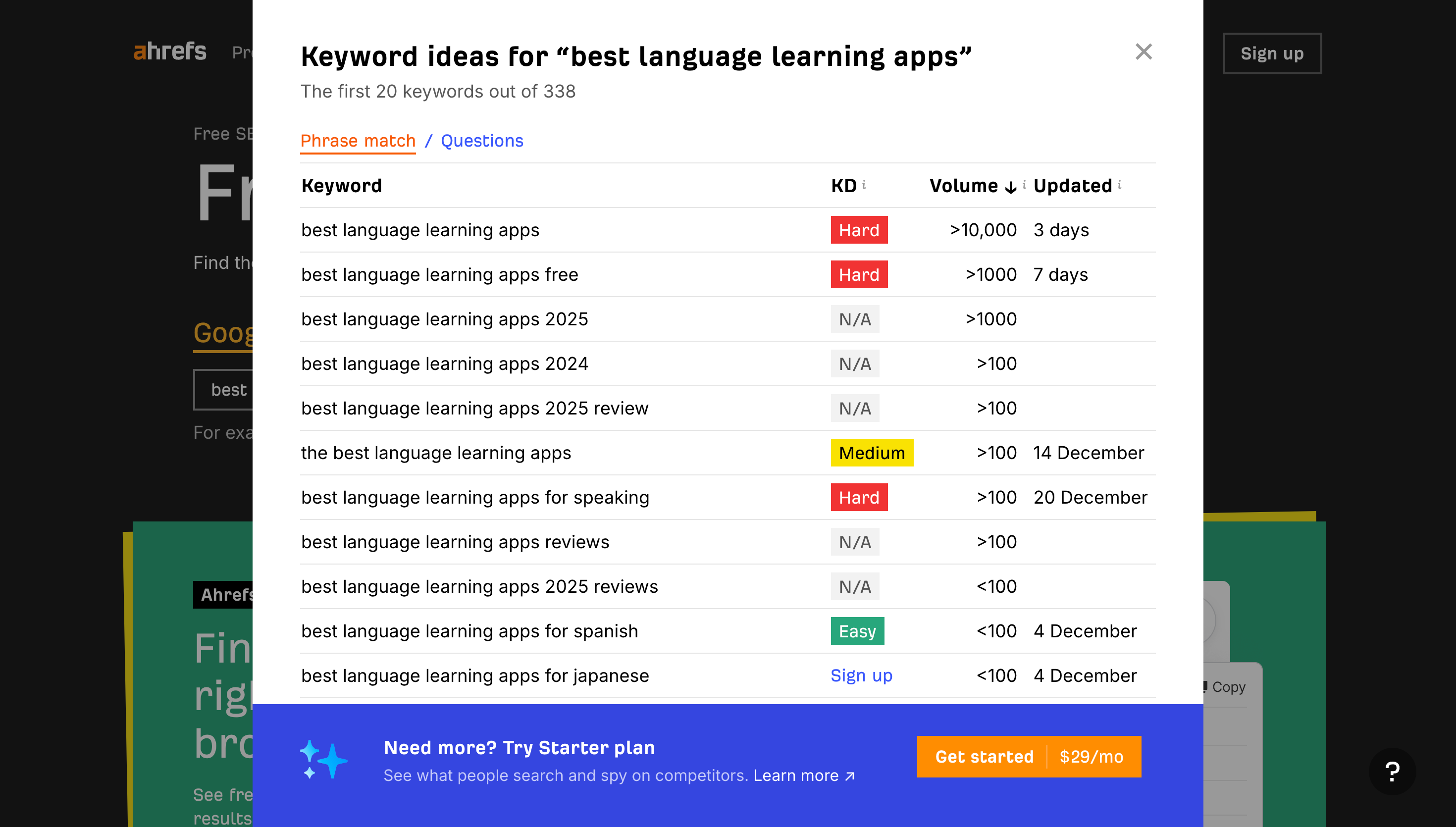
The Ahrefs free keyword generator is surprisingly powerful. You type in "best" plus whatever category your product fits, select your target geography, and it returns a list of keywords that real people are actually searching for.
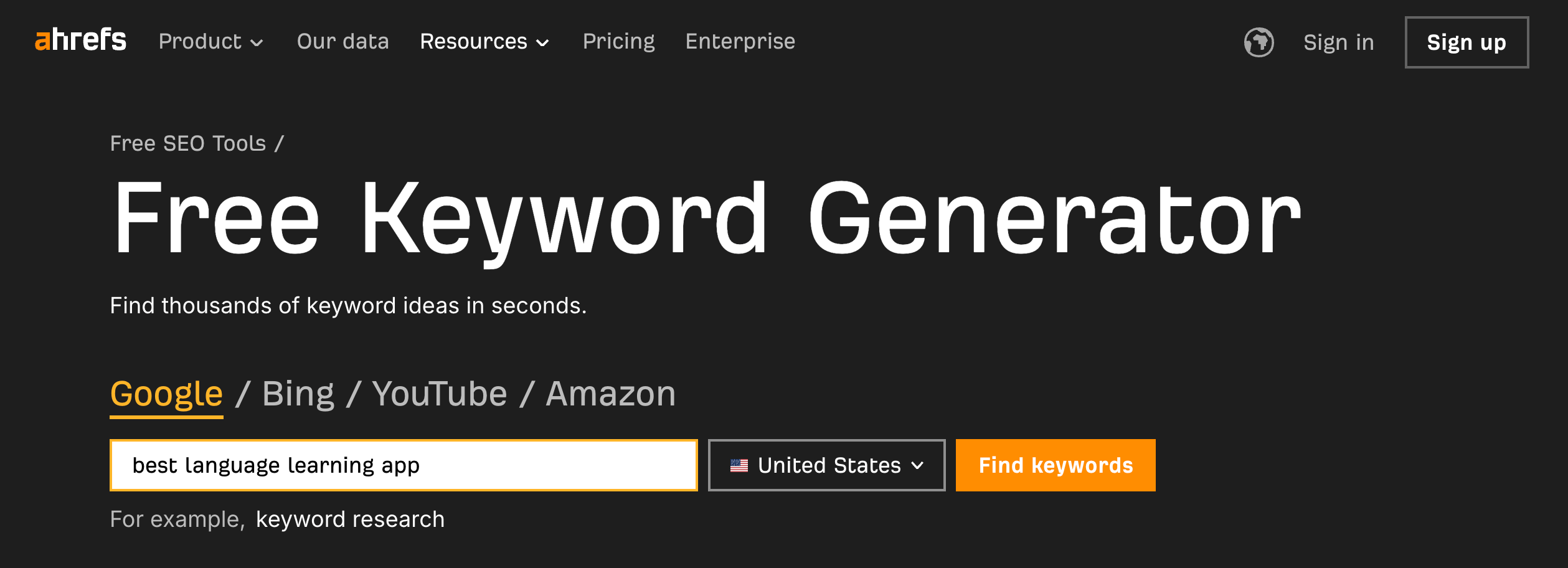
The volume numbers are often low — under 100 monthly searches — but that's a feature, not a bug. Low volume usually means low competition, which means you can actually rank.
Once you have a starting list from Ahrefs, you can use Claude or ChatGPT to expand it. The prompt I use asks the AI to brainstorm keywords across all four patterns: best keywords, alternatives keywords, comparison keywords, and jobs-to-be-done keywords.
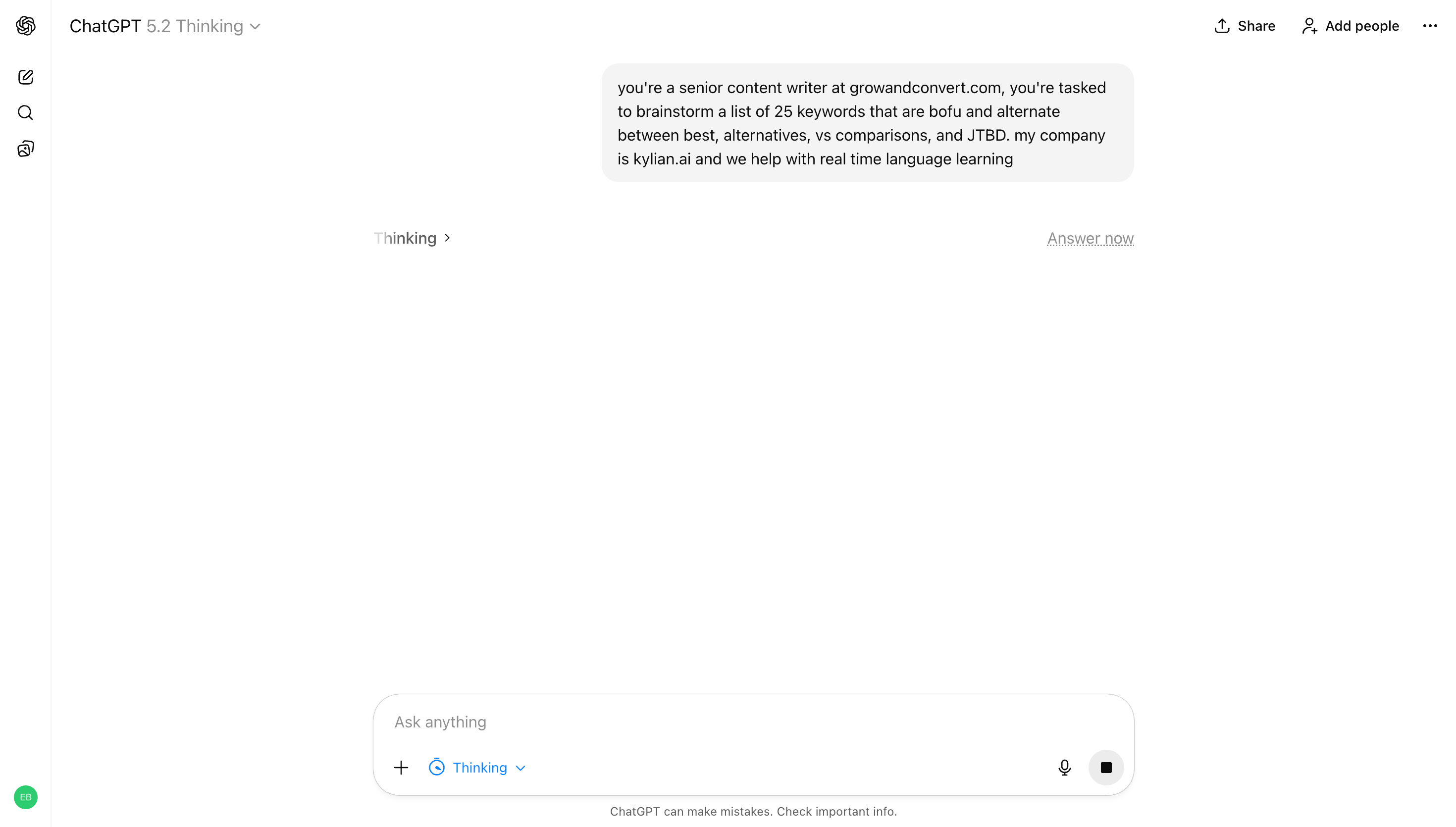
Here's the prompt: "You're a senior content writer at growandconvert.com, you're tasked to brainstorm a list of 25 keywords that are BOFU and alternate between:
- Best [category] keywords
- [Competitor] alternatives keywords
- [Tool A] vs [Tool B] comparison keywords
- Jobs-to-be-done (JTBD) keywords
Then it returns something like:
| # | Type | Keyword |
|---|---|---|
| 1 | Best | best app to learn Spanish for adults |
| 2 | Alternatives | Duolingo alternatives |
| 3 | VS | Duolingo vs Babbel |
| 4 | JTBD | how to learn Spanish fast |
| 5 | Best | best AI language tutor app |
| 6 | Alternatives | Rosetta Stone alternatives |
| 7 | VS | Memrise vs Duolingo |
| 8 | JTBD | how to practice speaking French without a tutor |
| 9 | Best | best app for conversational Spanish |
| 10 | Alternatives | Babbel alternatives |
Here's the prompt: "Using your list and this list from Ahrefs [paste your Ahrefs keywords], please build a version with prioritization and a note on why, so I can focus my efforts on what works."
Claude will return a tiered list:
Tier 1: Start Here (High Intent + Low Competition)
| Keyword | Type | Why Prioritize |
|---|---|---|
| Duolingo alternatives | Alternatives | Market leader. Anyone searching this is actively unhappy and shopping. |
| Rosetta Stone alternatives | Alternatives | Legacy brand. Searchers want something modern. |
| best AI language tutor app | Best | Emerging category. Low competition, high intent. |
| best app to learn Spanish for adults | Best | Adults are underserved. Duolingo feels childish to them. |
| Duolingo vs Babbel | VS | "Final decision" search. Days away from subscribing. |
| Keyword | Type | Why It's Tier 2 |
|---|---|---|
| Babbel alternatives | Alternatives | Premium positioning. Searchers have budget. |
| best app for conversational Spanish | Best | Specific pain point—speaking practice is hard to find. |
| Memrise alternatives | Alternatives | Different learning style. Good contrast story. |
| Keyword | Type | Why It's Tier 3 |
|---|---|---|
| how to learn Spanish fast | JTBD | Tutorial intent. Convert with "traditional way vs AI tutor" structure. |
| how to practice speaking French without a tutor | JTBD | Specific pain point. Longer path to conversion. |
| how to stay motivated learning a language | JTBD | Retention-focused. Niche but qualified. |
The key insight here is that you're not trying to rank for everything. You're trying to rank for the specific queries that indicate someone is ready to buy. A thousand visitors from high-intent keywords are worth more than a hundred thousand visitors from informational queries, because those thousand visitors are actually going to convert.
How to Write Content That Actually Ranks And Converts
There's a specific approach to content that tends to rank and convert, and it's worth understanding why.
I've extensivelly written about this in What Makes Content Actually Work (And How to Write It) but here's the shorter version.
The most important principle is to respect your reader's time. Most blog posts bury the useful information under paragraphs of throat-clearing and context-setting. "In today's rapidly evolving digital landscape..." and so on. Readers can smell this padding, and so can Google. When someone searches for "best CRM for startups," they want to know what the best CRMs are. Give them that information immediately.
The second principle is to have opinions and express them clearly. The internet is full of hedging. "It depends on your needs." "Both options have pros and cons." "The best choice varies by situation." This kind of writing is useless to someone trying to make a decision. What they want is for you to just tell them what to do. If you've actually used the tools you're writing about, you have opinions about them. Share those opinions directly, with reasoning to back them up.
This doesn't mean being unfair to competitors. In fact, being fair to competitors is part of what makes content trustworthy. If you trash-talk every alternative to your product, readers will correctly identify you as biased and discount everything you say. But if you honestly explain when a competitor is the right choice and when they're not, readers will trust your judgment when you recommend your own product.
The third principle is to include things that other content doesn't. Google has started talking about something called "information gain" — the degree to which a piece of content adds new information beyond what already exists on the topic. If your article says the same things as every other article on the same keyword, there's no reason for Google to rank you. But if you include original data, unique comparisons, screenshots from inside competitor products, or pricing information that's hard to find elsewhere, you're giving Google a reason to put you at the top.
The fourth principle is structural. Your content should include tables for comparison information, because tables are scannable and Google loves featuring them in snippets. It should include at least ten internal links to other content on your site, because internal linking distributes authority and helps Google understand your content structure. It should include images that actually add value — screenshots, diagrams, charts — not decorative stock photos that waste bandwidth.
None of this is complicated. It's just attention to craft. The bar in most industries is low enough that simply caring about quality puts you ahead of most competitors.
Though Good Content Alone Won't Get You There; You Need Quantity Too
There's a debate in content marketing circles about quality versus quantity. The conventional wisdom says that one great piece of content beats ten mediocre pieces. The reasoning is that Google rewards depth and quality, so you should focus your energy on creating fewer, better articles.
I think this advice is wrong, or at least incomplete, when applied to startups starting from zero.
Here's the math that convinced me. If you're building a new site with no existing authority, you're competing against established players who have been publishing for years. Some of these sites have 500 or 1,000 or 5,000 articles indexed. At a pace of four articles per month, which is what most content marketers recommend, it would take you ten years to reach 480 articles. You'll run out of money and patience long before you reach a competitive scale.
But if you can publish 20 articles per month, you reach 480 articles in two years. More importantly, you start seeing compounding effects much sooner. Google notices sites that are actively publishing. Pages start ranking, which generates backlinks, which improves domain authority, which helps other pages rank. The flywheel effect kicks in, but only if you're generating enough content to create momentum.
When I look at my own data, the pattern is unmistakable. For the first five weeks, when I was publishing slowly and carefully, traffic barely moved. I was getting single-digit clicks per day. But when I ramped up to one article per day, something shifted. Traffic started climbing in a way that felt qualitatively different — not gradual improvement, but genuine acceleration.
Linear growth. 48 months to reach 25k monthly clicks.
Hockey stick growth. 10 months to reach 40k monthly clicks.
Same quality content. Different velocity. The compounding effect only kicks in when you publish fast enough to build momentum.
Now, the obvious objection to this is that you can't write 20 quality articles per month. And if you're imagining sitting down with a blank document and crafting each piece from scratch, that's probably true. The way to make this work is to systematize the process.
The approach I use starts with hiring a professional content marketer to write one excellent article manually. Not to produce content at scale, but to establish the standard and document the process. What research do they do? What structure do they use? How do they think about voice and tone? Once that process is documented, you can use AI to scale production while maintaining quality.
Claude and ChatGPT are not good at writing articles from scratch. The output is generic and detectable. But they're excellent at specific subtasks: generating outlines based on top-ranking content, drafting sections that you then heavily edit, suggesting examples and data points to include, identifying gaps in your argument. You still have to do the thinking. You still have to edit ruthlessly. But the AI handles the typing, which cuts production time dramatically.
With this approach, I can produce a complete article in 45 to 60 minutes. That makes 20 articles per month achievable in 15 to 20 hours of focused writing time. It's a lot, but it's not impossible.
I Started Seeing Results From Month 3 And Now I'm Getting 3k+ Clicks Per Day
I've spent most of this post on how I did things rather than what resulted from doing them. This was intentional — the methods are what you can actually use, while the results are just evidence that the methods work. But the results do matter, so let me lay them out. I’ve spent most of this post explaining how I approached content rather than what happened afterwards. That was intentional—the methods are reusable; results are circumstantial. But the results prove what velocity unlocks.
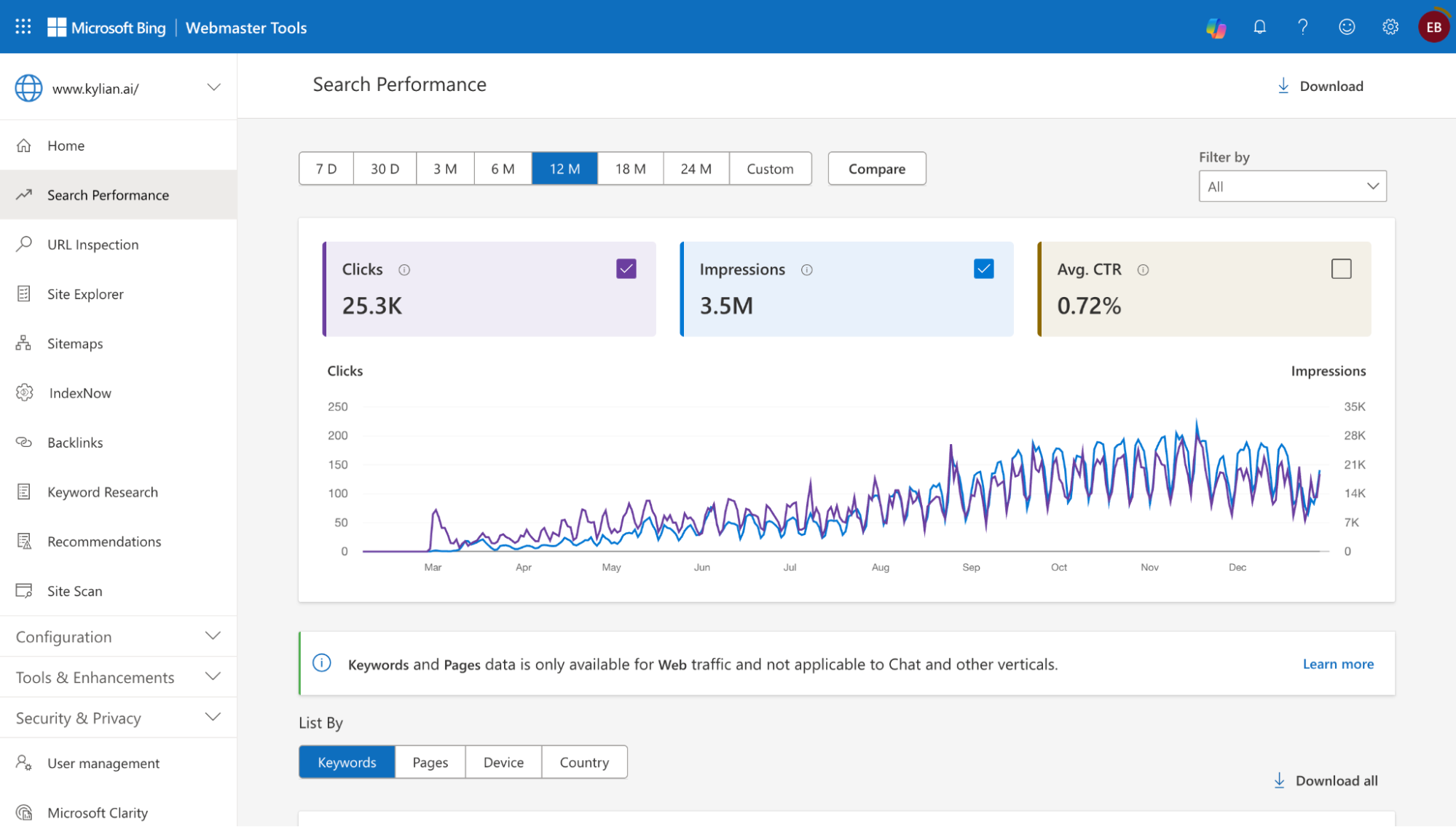
I published the first article on February 3rd. For the next three weeks, almost nothing happened: single‑digit clicks per day, a few dozen impressions, zero sign‑ups. That lull isn’t failure; it’s incubation. Google’s indexers were discovering pages, linking them internally and testing them on long‑tail queries. It’s the part where most people quit because there’s no feedback loop.
By mid‑March, after ramping up publishing cadence, the first inflection appeared. Daily clicks crossed 100 and stayed there. By April, they cracked 200. When the archive exceeded 200 posts, the line went vertical. Daily traffic climbed to 500 by May, ~1 000 by early summer and around 1 500 by early autumn. It was never linear; it was exponential. Each month didn’t just add traffic; it increased the rate at which future traffic accumulated.
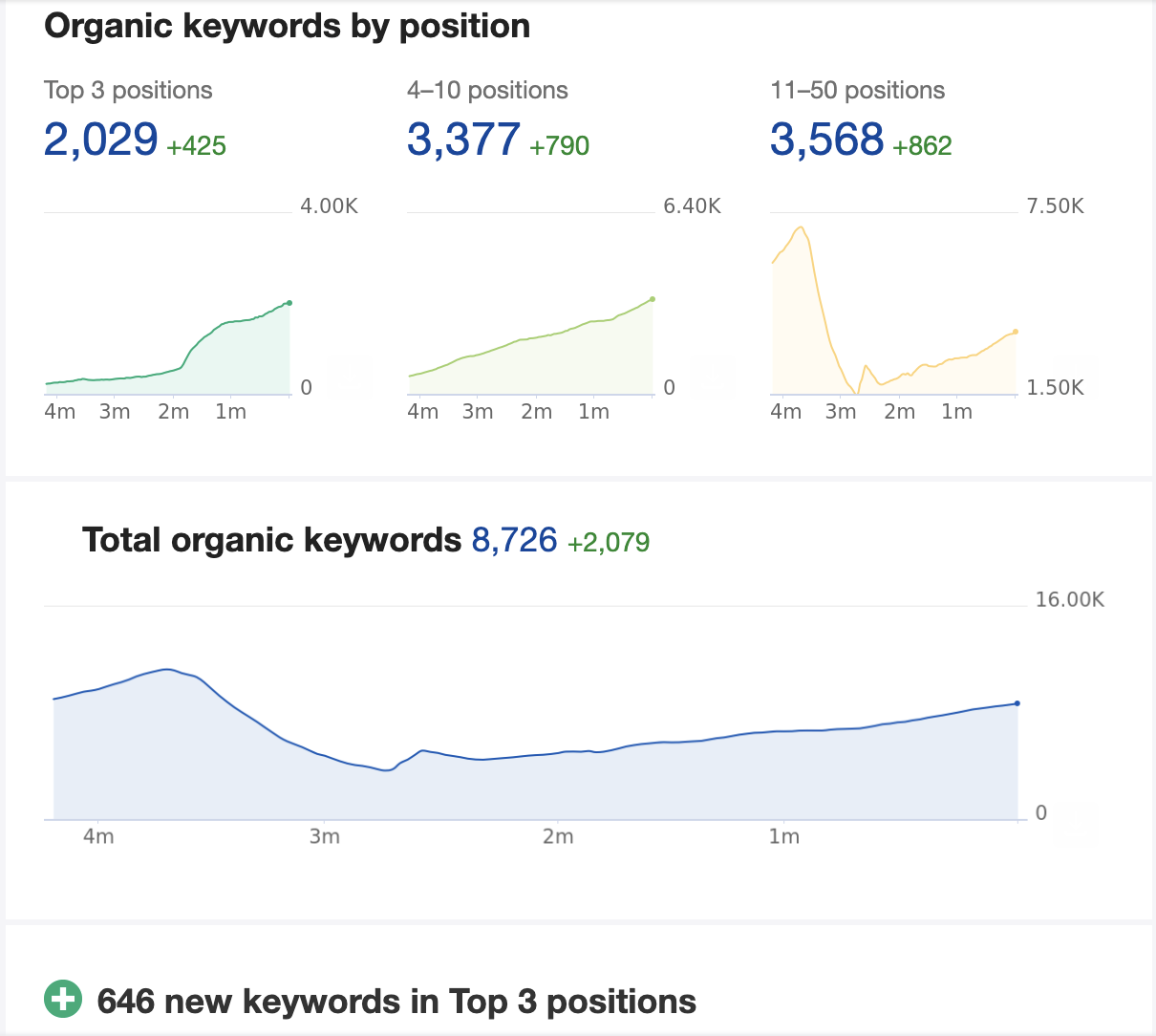
The same effect showed up in rankings. When I looked at Ahrefs’ Organic Keywords report today, the site ranks for about 22 100 keywords, with ≈7 000 keywords in positions 1–3. At the six‑month mark, only a few hundred keywords were on the first page; most sat in the 21–50 bucket. As publishing accelerated, those “middle‑of‑pack” terms migrated upward. Pages that started at positions 30–50 slid into 11–20, then into 4–10 and eventually into the top three.
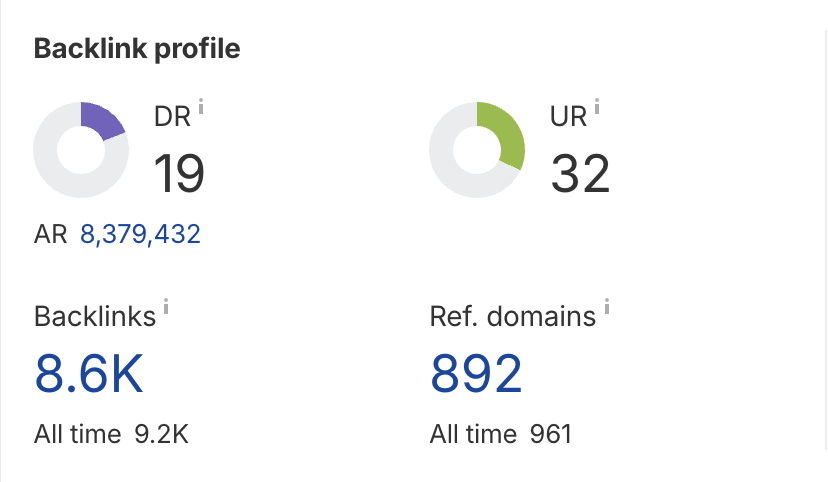
Velocity builds domain authority too. According to the Ahrefs overview, Kylian’s domain rating (DR) is 19 and the URL rating (UR) is 32. That may not sound huge, but both started at zero. Backlinks have grown to 8.6 K live links from 893 referring domains, up from only a handful early on.
A notable share of those links are “linkable assets”: detailed guides on language nuances, slang explainers and cultural notes. Many of these posts naturally attract citations because they answer specific questions better than generic dictionaries. As these assets aged and were updated, their referring domains increased month over month without additional outreach.
Organic Traffic
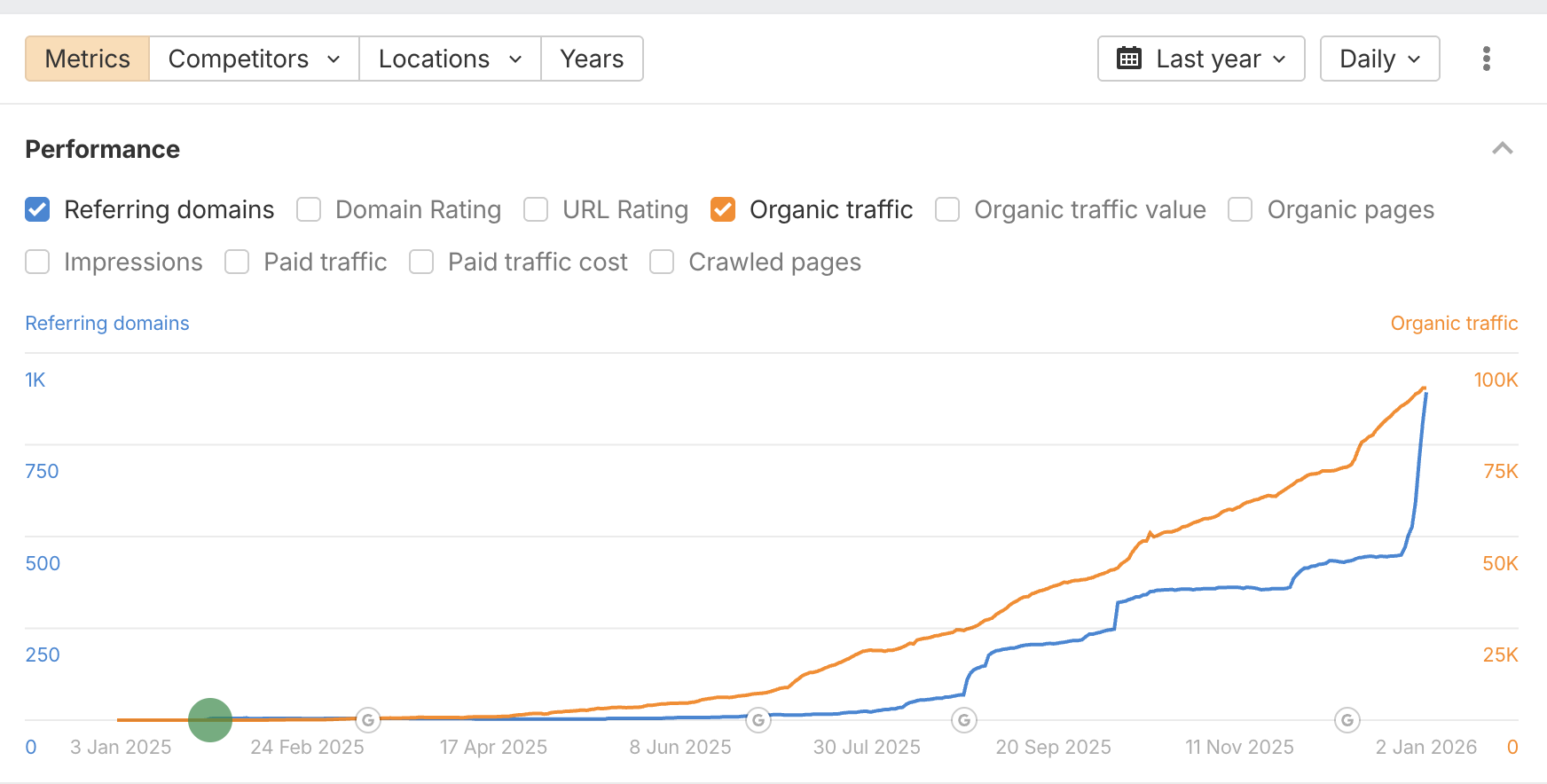
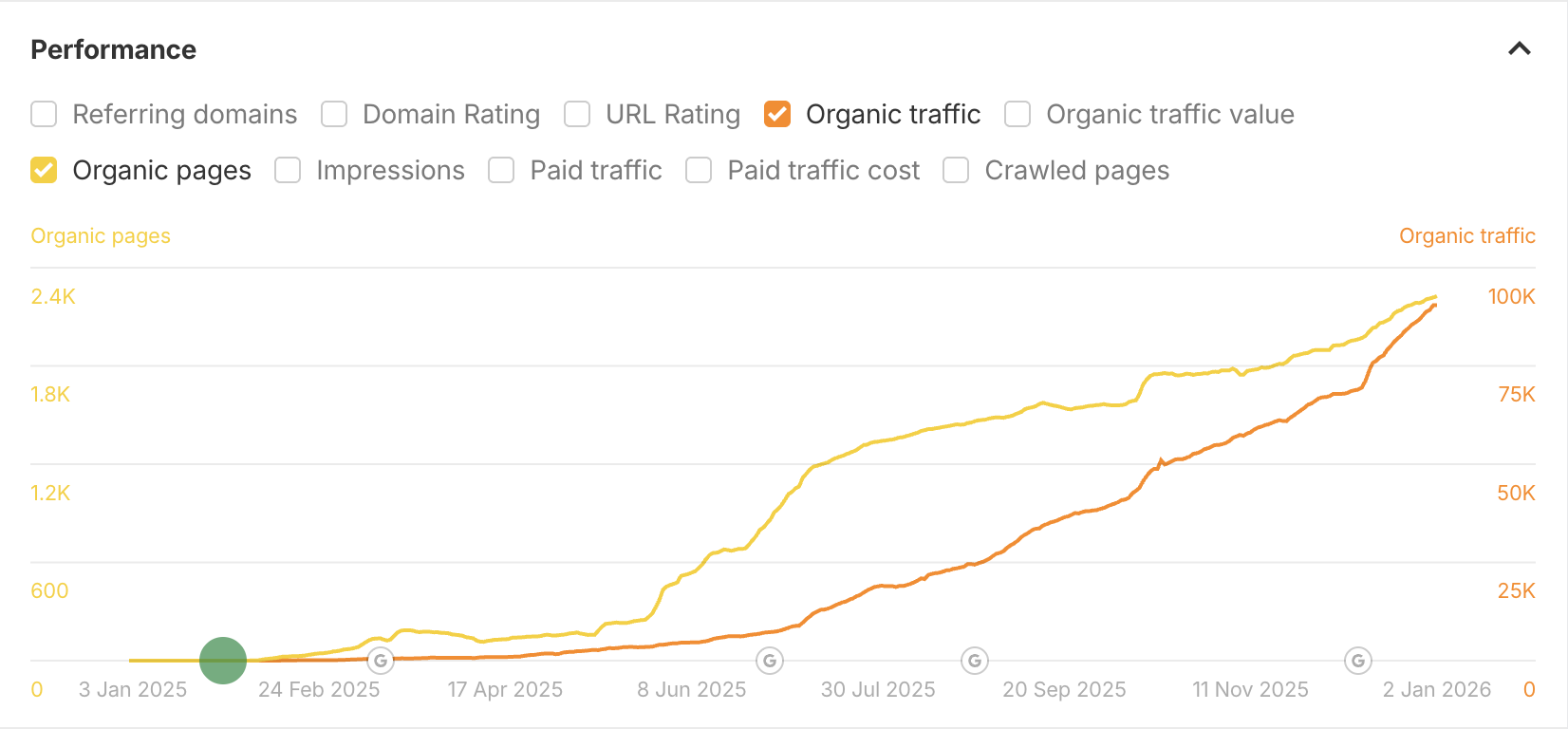
Ahrefs estimates current organic traffic at ~90.4 K monthly visits. That’s purely from search, with zero spent on ads. The traffic line is stacked: articles published in March still drive visitors in December, and every new piece adds to the base. Organic clicks weren’t limited to English‑speaking markets either.
Without targeting international keywords deliberately, the site attracted audiences from Spain, the United States, Italy, South Korea, Mexico and Germany (in that order). Publishing multilingual versions of posts meant each language operated as its own growth loop. The Spanish index now drives more traffic than the U.S. one. This cross‑language compounding is why the traffic chart looks like a hockey stick: each new language multiplies the surface area.
| Country | Clicks | Impressions |
|---|---|---|
| Spain | 49,123 | 4.9M |
| USA | 15,225 | 10.8M |
| Italy | 13,327 | 3.3M |
| South Korea | 11,911 | 3.5M |
| Mexico | 9,694 | 4.2M |
| Germany | 8,027 | 1.9M |
| France | 6,508 | 919K |
| Page | Clicks | CTR |
|---|---|---|
| Homepage | 8,539 | 31.2% |
| Spanish homepage | 7,195 | 32.8% |
| Spanish blog post | 11,595 | 15.1% |
| English blog post | 3,681 | 9.8% |
| French blog post | 3,640 | 3.3% |
Conversion and Business Impact
The traffic growth I’ve described translates cleanly into users who join and engage. Google Analytics logged 2 385 sign‑ups during 2025, with 1 911 of them coming from organic search. That means roughly four out of five new users found us through search engines rather than ads, social posts or direct bookmarks. Direct traffic contributed another 364 sign‑ups, referral links 86 and everything else combined just 24.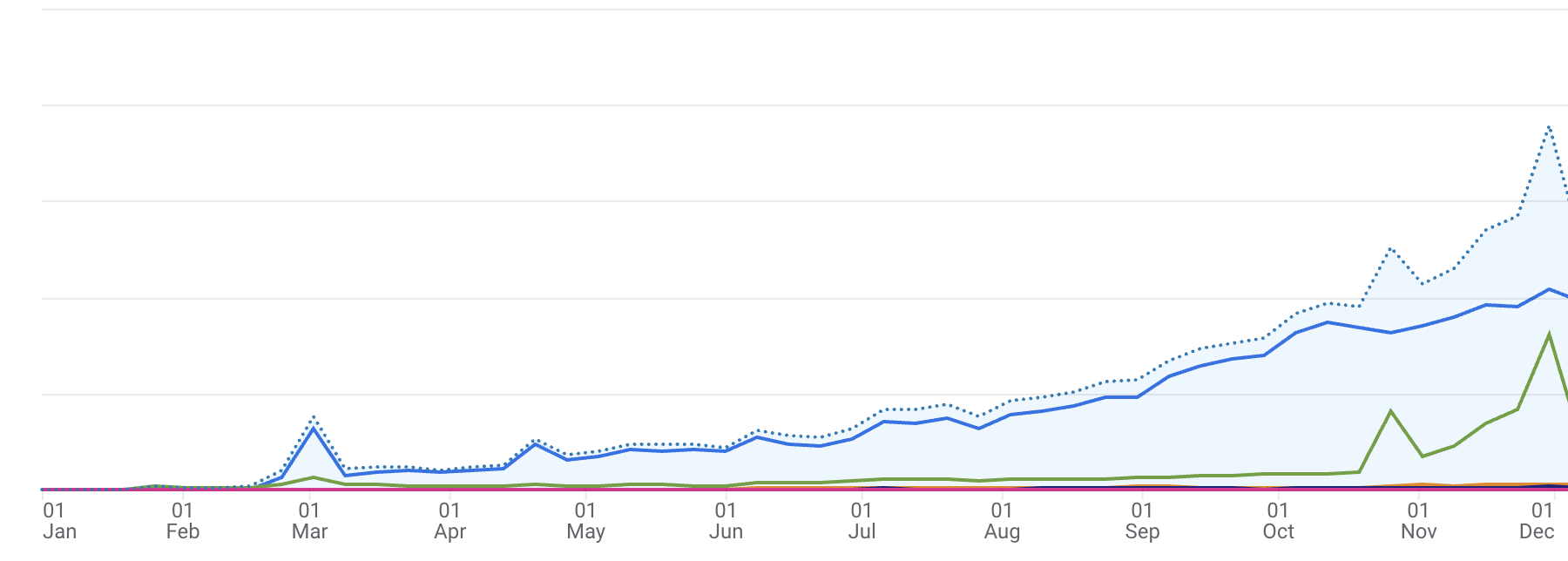
When I zoom in on December 2025—the last full month before this post—the pattern holds. We recorded 88 sign‑ups for the month, and 52 (≈59 %) were generated by organic search. Direct traffic brought in 14 sign‑ups (≈16 %), referrals 15 (≈17 %) and unassigned sources 7 (≈8 %).
Another way to look at this is event volume. In December the site registered 205 749 events, of which 156 212 were from organic search. That’s three‑quarters of all interactions. The rest came from direct visits, referrals and a smattering of unassigned sources. This mirrors the earlier growth curves: as publishing velocity increased, organic traffic became the dominant acquisition channel—and conversions scaled accordingly.
The business implication is simple but powerful. By month six, the organic engine was generating enough sign‑ups to validate the product without paid acquisition. By month ten, it was delivering the bulk of new customers. Today, organic search still drives the majority of sign‑ups, despite zero marginal cost per visitor. The content published months ago continues to bring in qualified users, demonstrating the compound value of SEO.
The Beauty Of Great Content Is That It Transcends SEO And Works In AI Search
Here's where things get interesting, and where I think most founders are still asleep.
SEO as traditionally understood is about ranking in Google. But Google is no longer the only place people go for information. ChatGPT, Perplexity, Microsoft Copilot, and other AI answer engines are now handling millions of queries that would have gone to Google a year ago. And these systems work differently from traditional search in ways that create new opportunities.
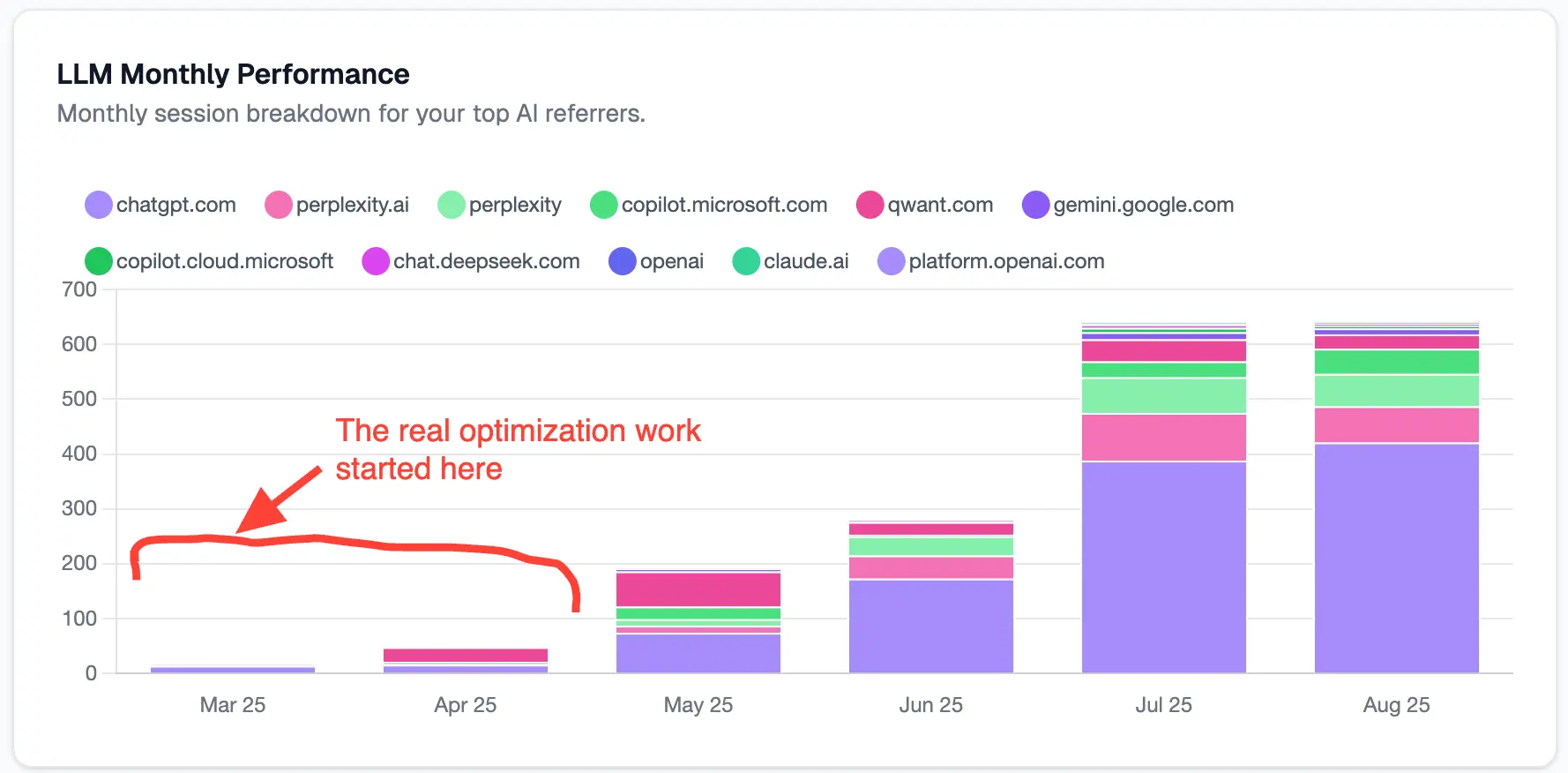
When I first started publishing content, my AI referral traffic was zero. Not low — literally zero. I could see from my analytics that ChatGPT and Perplexity existed as referral sources, but they weren't sending me any visitors. At first, I assumed this was just because my site was new and unknown. But as I dug deeper, I realized the problem was more fundamental.
Large language models don't drive traffic for informational queries. If someone asks ChatGPT "how do I apologize in Spanish," the model just answers the question. It doesn't need to cite a source because it's not retrieving information from somewhere else — it's generating the answer from its training data. No brand gets mentioned, no link gets dropped, no referral shows up in your analytics.
This is why top-of-funnel educational content, which works reasonably well for traditional SEO, produces almost nothing in AI search. I had articles ranking well for queries like "20 French words for gratefulness" or "how to say I'm tired in Spanish." These generated decent Google traffic but zero AI traffic. The models could answer those questions themselves, so they had no reason to send users anywhere.
The opportunity in AI search is at the bottom of the funnel, with evaluative queries where the model benefits from citing external sources. When someone asks "what are the best apps for learning Spanish" or "which language learning tool has the most speaking practice," the model wants to give a credible answer. And credible answers require evidence — specific products with specific features that the model can point to. This is where your brand can get mentioned, and where that mention turns into traffic.
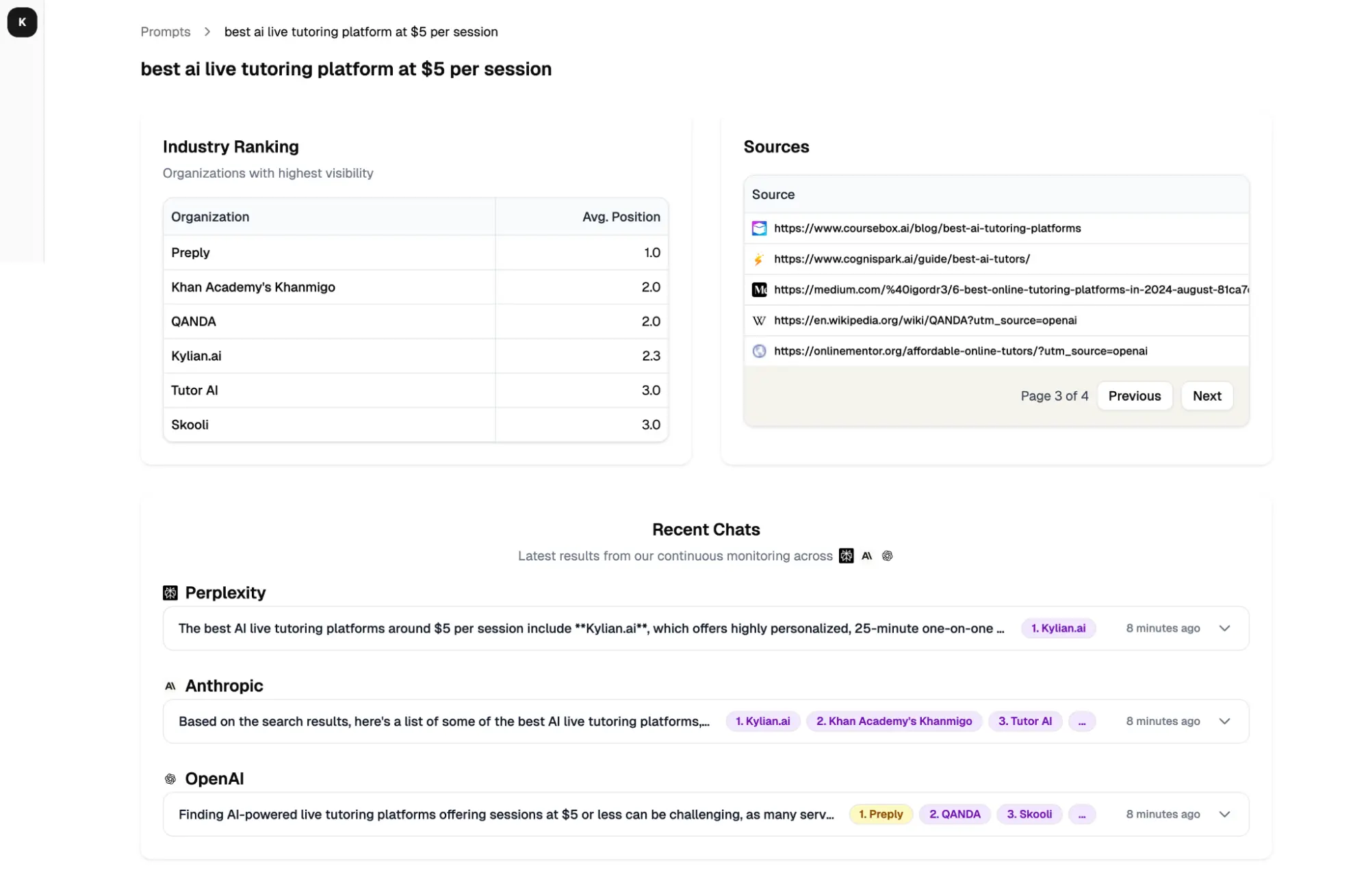
Once I understood this, I completely changed my content strategy. Instead of publishing educational content about language learning in general, I shifted to evaluative content about specific solutions. Articles like "Best AI English tutors for adults" or comparisons between my product and alternatives or clear explanations of who my product is for and who it's not for. This content speaks directly to people making decisions, and more importantly, it gives AI models clean, quotable evidence to reference when they're trying to answer evaluative queries.
But changing the content wasn't enough. I also had to change how I described my product.
The way AI models understand brands is through the text they can find about those brands. If your product description is vague or marketing-speak-heavy, the model won't know how to talk about you. It'll either skip you entirely or describe you poorly. The fix is to write product descriptions in short, factual sentences that a model can easily lift and quote. Instead of "a revolutionary approach to language learning that leverages cutting-edge AI technology," something like "Spanish lessons at less than $5 per lesson, with unlimited speaking practice, available 24/7."
I rewrote my homepage and product pages with this in mind. Short sentences. Specific facts. Numbers that models could cite — lesson lengths, pricing, the specific frameworks and standards we aligned with. Within weeks, I started seeing the first trickles of AI traffic. A few visits from ChatGPT here, a few from Perplexity there. By the third month of this approach, AI sources were sending 200 visitors per month. By month eight, that number had grown to over 1,000 per month.
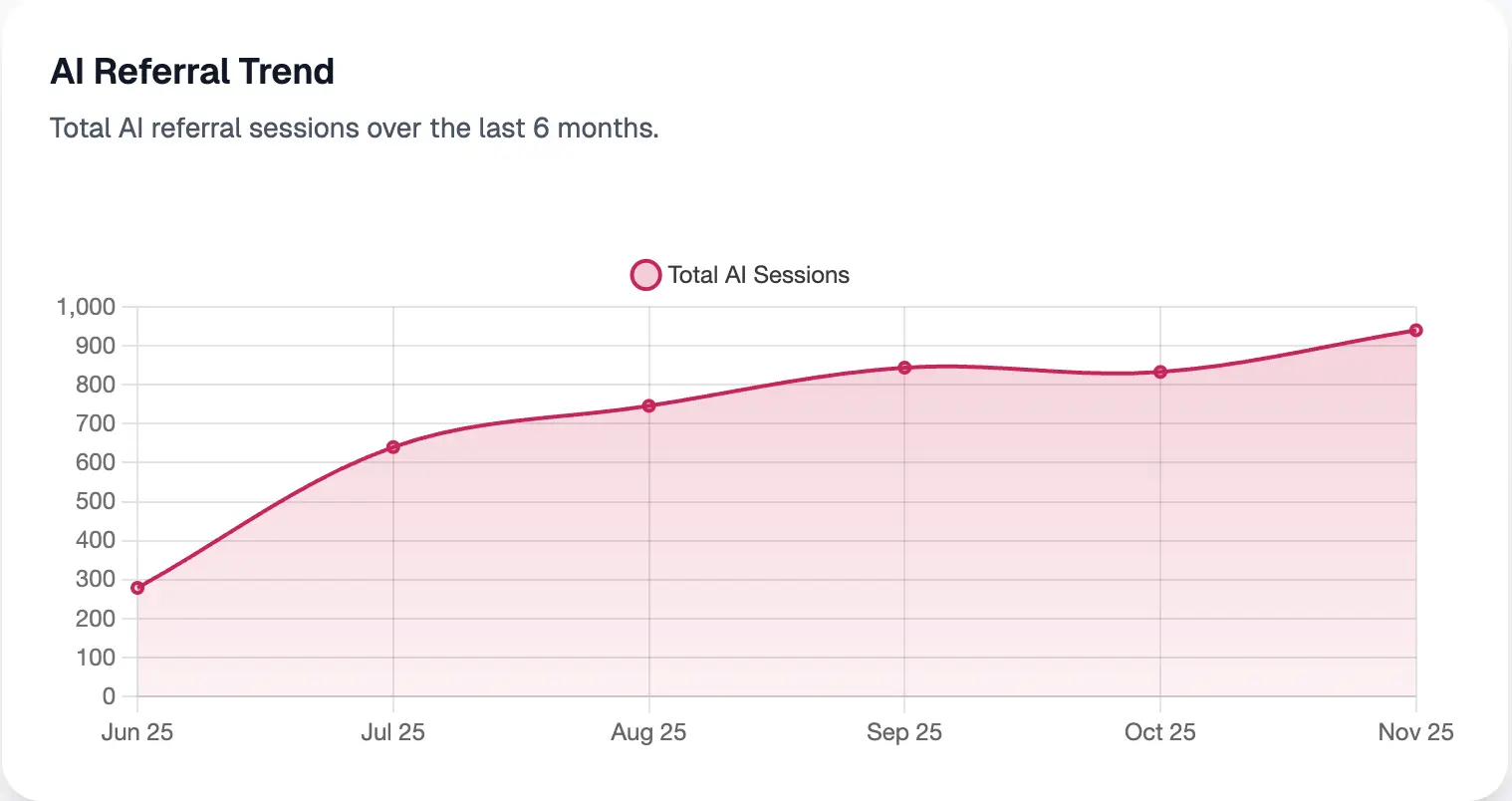
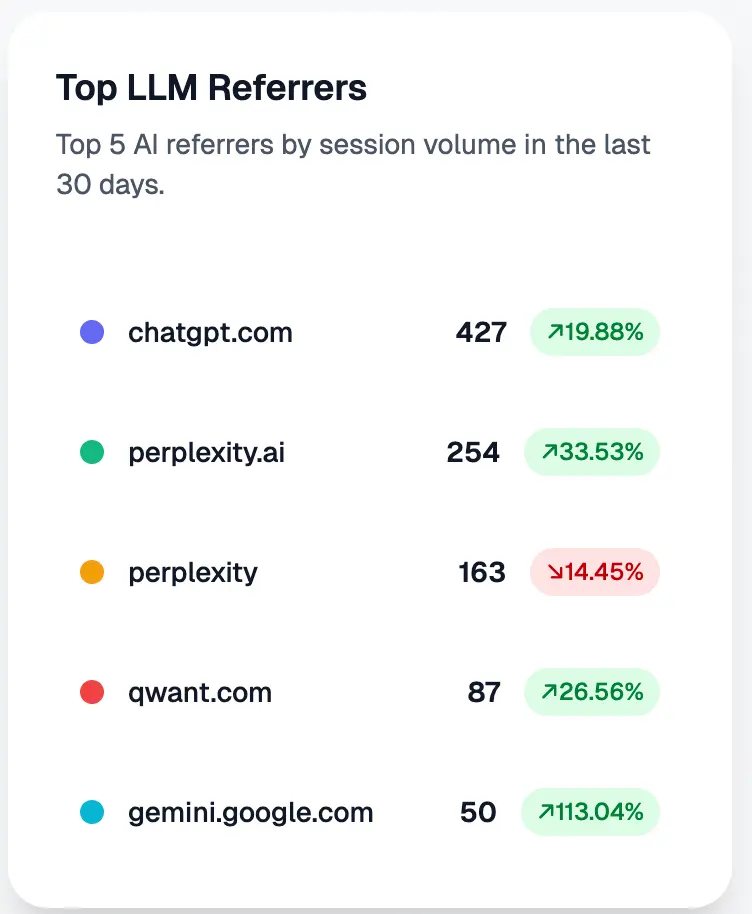
The composition of that traffic is interesting. ChatGPT emerged as the dominant driver, sending more than 400 visits in a single month at one point. Microsoft Copilot grew steadily, showing the value of optimizing for Microsoft's ecosystem. Perplexity and other sources fluctuated more — sometimes up, sometimes down — which reinforced the importance of not relying on any single AI platform.
What really surprised me was the conversion rate. AI traffic converts at a dramatically higher rate than typical blog traffic. I saw conversion rates in the 7 to 8 percent range for AI-referred visitors, compared to 1 to 2 percent for standard organic traffic. This makes sense when you think about the user journey. Someone who asks ChatGPT for a product recommendation and clicks through to your site is much further down the decision funnel than someone who stumbled onto your blog while researching a topic.
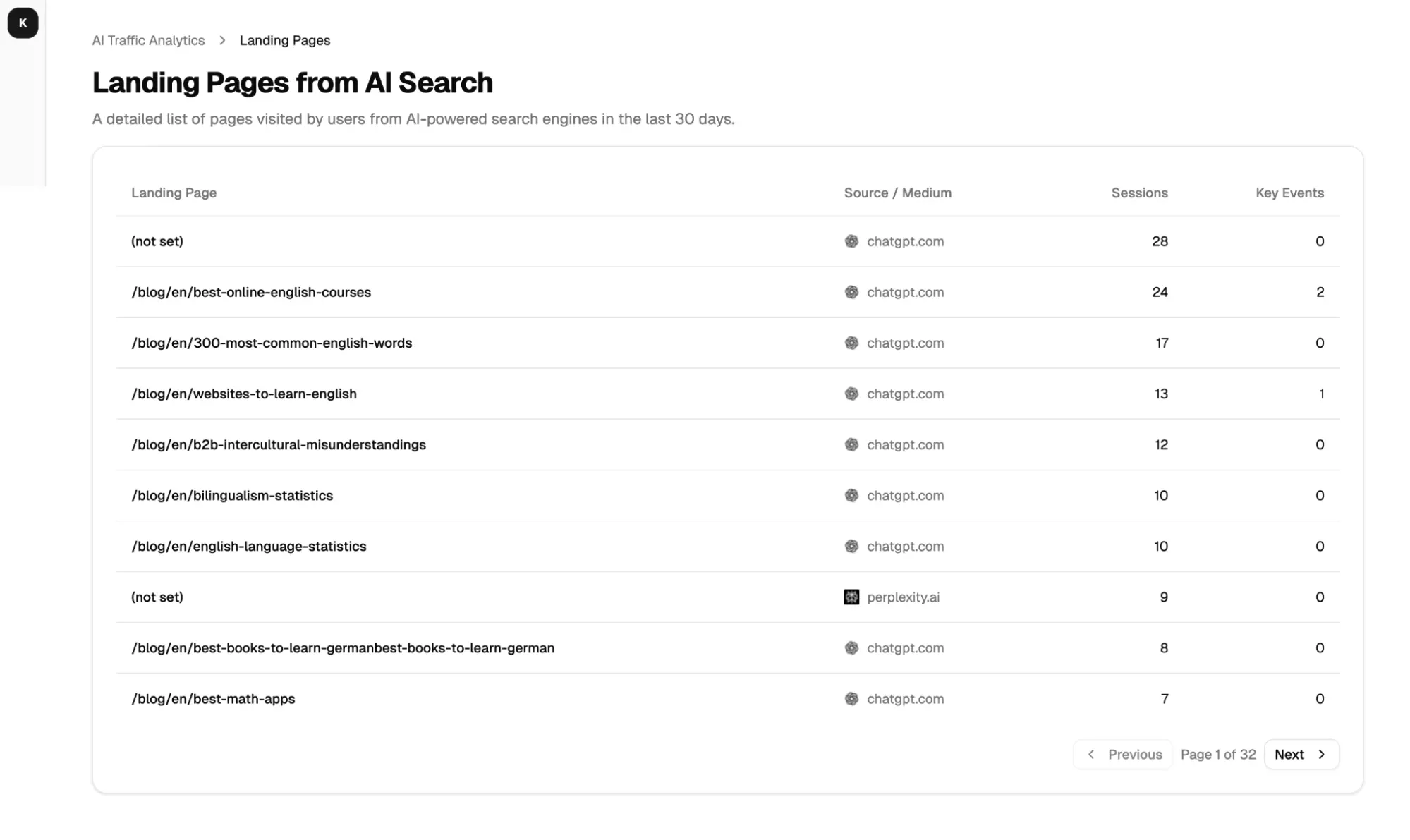
The implication is that AI search traffic, even at relatively low volumes, can have outsized business impact. A thousand visitors at 8 percent conversion is 80 users. A thousand visitors at 2 percent conversion is 20 users. If you're early-stage and every user matters, that 4x difference in conversion is significant.
There's also a compounding element to AI citations that mirrors traditional SEO. When models mention your product, that mention becomes part of the evidence base that other queries can draw on. Getting cited once makes it more likely you'll get cited again. This creates a flywheel effect where early optimization pays increasing dividends over time.
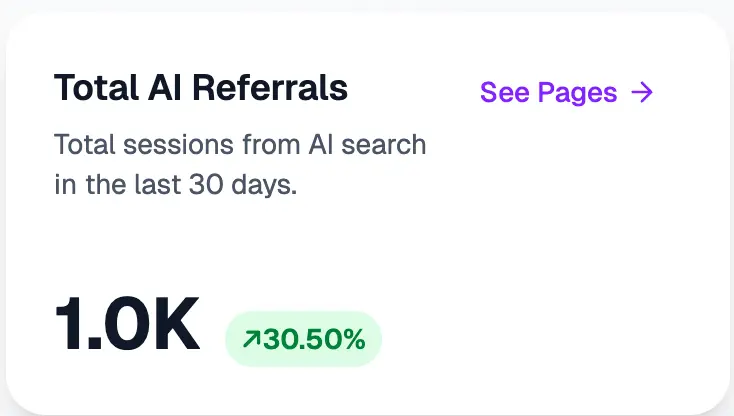
The strategic takeaway is that good SEO content is now pulling double duty. The same content that ranks in Google is also what AI models reference when they're generating answers. This means the return on content investment is higher than it was even a few years ago, because each piece of content is working in two channels instead of one.
What I Would Do Differently If I Could Go Back In Time
Starting over with what I know now, a few things would change.
I would start publishing immediately instead of spending weeks planning. Every day spent planning is a day lost from the compounding curve. The right approach is to publish something imperfect, learn from it, and improve as you go. Waiting for perfect preparation is just procrastination with a productivity veneer.
I would build the internal linking system from day one. For my first 50 articles, I was sloppy about linking between posts. I had to go back later and retrofit links, which was tedious and time-consuming. A simple spreadsheet tracking which posts link to which other posts would have saved hours of cleanup.
I would go multilingual faster. More than a quarter of my traffic comes from Spain, and another significant chunk from other non-English-speaking countries. If your product can serve international users, translating content early is one of the highest-leverage things you can do.
I would set up proper conversion tracking before publishing anything. I didn't have sign-up tracking for the first month, which means I have no data on how early content actually converted. That's a gap in my understanding that can never be filled.
And I would ignore the conventional wisdom about needing backlinks and domain authority to rank. Everyone told me this. Everyone was wrong, or at least overstating the case. Consistently publishing quality content is worth more than any link-building scheme. The backlinks follow the content, not the other way around.
The Larger Point
What I've described here is not really about SEO. It's about finding a growth strategy that matches your resources and your personality.
The founder who's comfortable on camera, naturally charismatic, and energized by the performance of social media should probably do TikTok. The playbook exists and it works for some people. But that founder is not me, and I suspect it's not many of the people reading this.
SEO is the introvert's growth channel. You don't have to be on camera. You don't have to build a personal brand. You don't have to network or post daily on LinkedIn or cultivate a following. You just have to write useful things and publish them consistently.
The work is quiet. The results are slow to start but then compound dramatically. The effort you put in today continues paying dividends months and years from now. And the whole system runs in the background while you do other things.
If you're a founder without a budget, without an audience, and without any particular desire to become famous, this is the path I'd recommend. It worked for me. It can work for you.